Categories
Dehumidifier Industrial Dehumidifier

The Role of Industrial Dehumidifiers in Preserving Historical Archives and Artifacts.

In efforts to preserve historical archives and artifacts, this endeavor is noble and essential because it can let future generations touch and analyze the tangible remnants of the past. An industrial dehumidifier will undoubtedly help in this mammal task. Artifacts let us peek at the lives, mindsets, and worlds of those who lived before us; they are essential. Yet, the path to preserving these invaluable treasures is riddled with several challenges; one of the top ones is the humidity—a relentless opponent that can cause irreversible damage to irreplaceable treasures.

An efficient dehumidification system will undoubtedly ensure the durability of artifacts and archives. So, let us understand how to select, install, and maintain these dry air dehumidifiers to protect our cultural heritage.

Understanding the impact of humidity.

First, Physical Deterioration: That irritating humidity is infamous for its ability to warp, swell, or shrink organic materials like paper, wood, and textiles. This deformation in physicality doesn’t just impact an item’s aesthetic and historical value. However, it can also lead to structural disintegration over time. A commercial dehumidifier can avoid it.

Second, Chemical Degradation: Excessive moisture revs up chemical reactions in materials, leading to the deterioration of inks, dies, and other substances. This deterioration can lead to faded texts and images. In extreme cases, it can degrade the essence of historical documents and art pieces.

Third, Biological Threats: High Humidity levels can provide the perfect breeding ground for mold, mildew, and pests. Those little biological agents can consume and destroy organic materials, even ice cream, leaving behind stains, unpleasant odors, and the complete ruin of historic pieces.

Basics of Dehumidification.

How Dehumidifiers Work: Now, on a basic level, industrial dehumidifiers remove excess moisture from the surrounding air. They attain this along various methods, such as condensation (that is, cooling air to remove moisture) and absorption/adsorption (where materials are used to suck up water vapor, right?). Both methods aim to generate dry air to control humidity, essential for preserving the environment. 

Types and Their Application: Dehumidifiers can come in various kinds, each perfect for different needs and environments. Refrigerant-based dehumidifiers are highly sought after for big spaces like museums and archives due to their efficiency in cold conditions! Desiccant dehumidifiers are perfect in cold settings and preferably used for delicate preservation needs, where controls on temperature are as important, if not more, as managing humidity.

Dehumidifiers for preserving.

Next, Stabilizing Environmental Conditions: To a room full of historical archives and artifacts, the commercial dehumidifier’s primary role is stabilizing the environmental humidity. The controlled environment it creates will prevent the physical, chemical, and biological degrading processes that could otherwise be fast-forwarded by moisture and, as a result, prolong the treasured historical materials’ life and integrity.

Case Studies of Effective Implementation: A lot of institutions have firsthand experienced the positive benefits of integrating industrial dehumidification systems into their game plan for preserving obras. For instance, the National Archives of a [Country] has reported a big reduction in mold outbreaks and physical deterioration of documents after they installed a state-of-the-art dehumidification system.

Choosing an industrial dehumidifier.

To Criteria for Archives and Museums: Choosing the right air dehumidifier requires a lot of consideration, such as the size of the space, the specific humidity requirements of materials being kept, and the climate conditions of the local environment space. Energy efficiency and the system’s ability to integrate into existing HVAC systems are also essential to consider.

For Maintenance for Longevity: Regular maintenance is essential, okay? To ensure that dehumidifiers would keep functioning effectively. Good maintenance not only prolongs the life of a dehumidifier but also ensures lasting protection for historical collections.

Latest dehumidification technologies.

Over time, commercial dehumidification technologies have improved in terms of power consumption. There are the so-called smart dehumidifiers, machines that could automatically adjust optimally based on data collected from the environment in real-time, and these are increasingly seen as go-to devices. The new edge portable industrial dehumidifier uses less power and successfully maintains dry conditions in the storage rooms.

Another promising tech in development integrates green dehumidification technology. These new desiccant dehumidifiers use silica as an absorbing agent instead of refrigeration circuits that use compress. Thus, it cuts down carbon footprints.
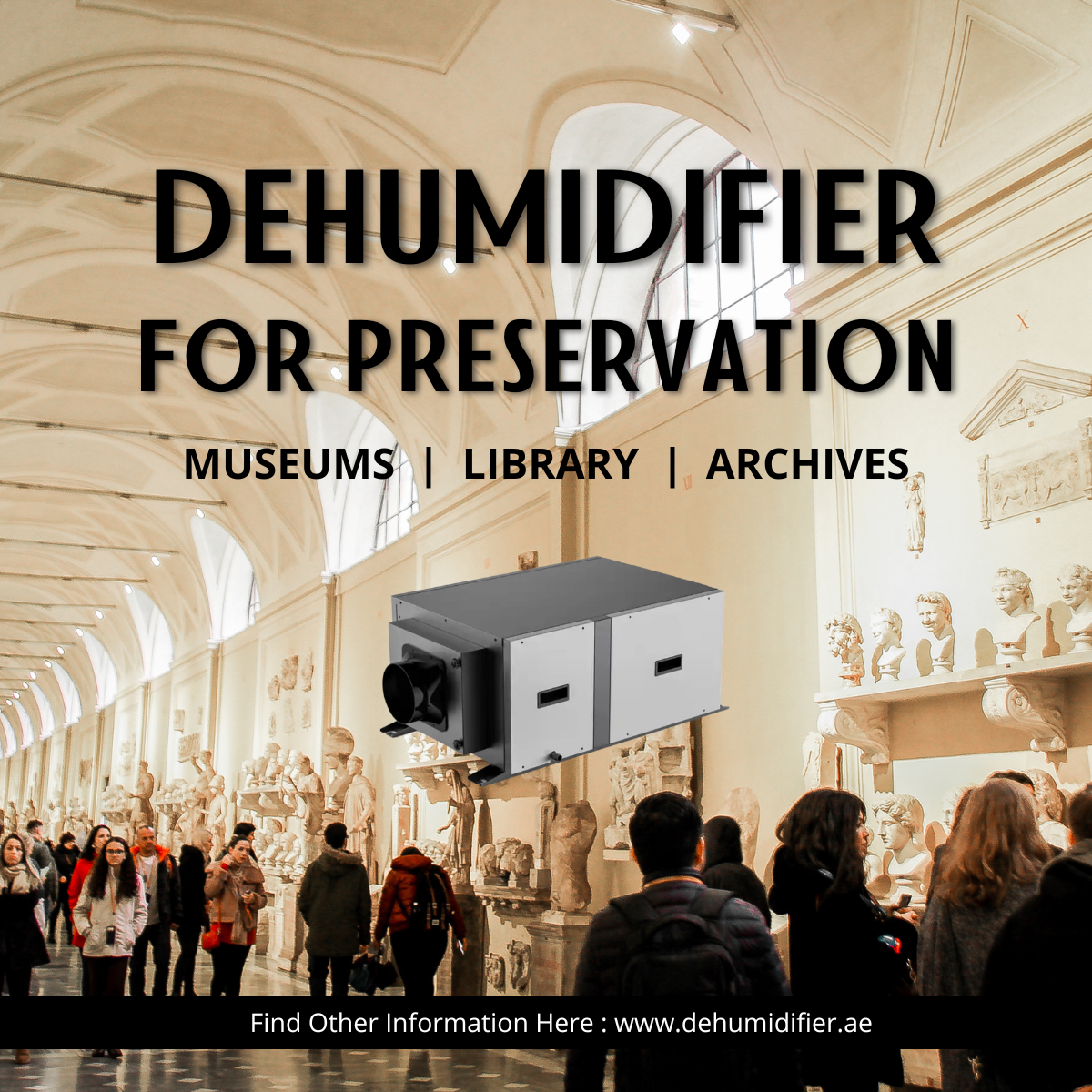
Dehumidifier for preservation of artifacts.

Practical applications.

In today’s world, archives, rooms, and museums use advanced dehumidification techniques to create dry conditions to protect artifacts and documents. For example, in a Museum of Natural History in [Generic Location], a recently implemented HVAC system includes a state-of-the-art solution to dehumidification. This dehumidifier uses sensors to monitor environmental conditions continually, and the dehumidification settings are adjusted automatically according to indoor and outdoor humidity levels.

Challenges and considerations.

Regardless of the progress in technology, along with the proven benefits of dehumidification, there are still quite a few challenges and considerations—yeah, just like we need food to live, these things also exist. One of the main concerns is needing to balance humidity levels. Humidity, whether too much or too little, can cause equal damage, leading to brittleness and cracks in organic artifacts. 

Another something to consider is the cast associated with advanced industrial dehumidifiers. Of course, the benefits in the long term are clear to see; the initial investment, though, could be significantly high, especially for relatively more minor institutions or those with limited budgets. Regardless, considering the potential for reducing maintenance and conservation expenses over time and the valuable effect of preserving cultural heritage, the money spent will always be worth it.

Dehumidifiers’ role in the preservation of historical archives and artifacts is not only key but also developing. Dehumidification machines are essential in maintaining the right environment to preserve historic treasures. With the fast advancement in technology paired with a rising emphasis on sustainability, the future of preservation is bright!

The path of preservation will continue, and through using the best technology and dedicating effort, we can shield our history for several years. Let’s install dehumidifiers in each archive room and museum to protect our history.

Categories
Dehumidifier

How does a dehumidifier Help to Reduce Electricity Bills?

People want to use less energy to save money and help the planet. They search for ways to do this at home. A small machine called a dehumidifier is only sometimes considered a hero in this quest. But it can help a lot. It takes out the extra wetness in the air. A dehumidification system makes your home more comfy. And it can lower how much energy you use too.

The connection between wet air and energy use is tricky. Moist air in your home affects how well your heating and cooling works. Damp air can make it feel hotter, so you use more air conditioning in hot times. It makes you use more energy and might break your cooling stuff sooner.

Also, an air dehumidifier is vital for more than just its use. It helps with the wetness in your home, making it better for energy and the Earth. It helps make a home comfy, saves money, and is earth-friendly.

As we learn more about how dehumidifiers help lower electricity costs, we must see the more significant impact of using them. Besides saving money, using humidity dryers shows a dedication to reducing our environmental impact and fighting climate change. This discovery is about finding a secret way to save energy and understanding how our choices affect our homes and the world around us.

Next, we’ll look at how dehumidifiers work, their effect on your energy bills, and what you can do to use them well. We’ll see how humidity affects energy expenses and choose the best dehumidifier. Our guide gives you the info you need to make smart choices about your energy use and help the environment.

Understanding Dehumidifiers.

A dehumidifier extracts excess moisture from the air at the heart of its operation. This process is not just about improving air quality; it’s a strategic move towards creating a more energy-efficient home. De-humidifiers operate on a simple yet effective principle: they draw in humid air, remove the moisture, and then release the dehumidified air back into the room. This cycle prevents the proliferation of mold and mildew and contributes to a feeling of comfort that doesn’t rely on adjusting the thermostat.

The Link Between Humidity and Energy Cost.

It’s crucial to understand the relationship between indoor humidity levels and the perceived temperature. High humidity can make the air feel warmer than it is, prompting an increased dependency on air conditioning systems. This answer makes sense, but it makes us use more power and pay more for electricity. A dehumidifier helps by keeping humidity at a good level. This means we don’t need as much cooling as we use less power.

Industrial dehumidifiers are used every day in commercial applications. Considering hours of usage, a dehumidification system saves lots of costs.

Dehumidifiers and Air Conditioning.

The synergy between dehumidification units and air conditioning systems is a testament to the potential for energy conservation within our homes. Dehumidifiers alleviate the workload on air conditioners by ensuring that the air remains at a comfortable humidity level. Humidity dryers conserve energy and prolong the lifespan of HVAC systems by sparing them from overuse during humid months.

Efficiency of modern air dryers.

Over the years, dehumidifier technology has improved with leaps and bounds regarding energy saving. The advent of ENERGY STAR-rated dehumidifiers has set a new standard, allowing homeowners to combat humidity without dreading skyrocketing energy costs. These models are meticulously designed to offer optimal dehumidification while consuming minimal energy. So, this device embodies the perfect marriage of functionality and sustainability.

Calculating Savings.

Quantifying the savings incurred by using a dehumidifier can be an eye-opening exercise. While specific savings vary based on numerous factors including the size of the space, the climate, and the efficiency of the device, the overarching principle remains the same: reduced humidity levels translate to less reliance on air conditioning, which in turn results in lower energy bills. The calculation of these savings, though dependent on individual circumstances, underscores the undeniable financial advantage of incorporating a dehumidifier into your home’s energy management strategy.

What are optimal settings for dehumidifiers?

Achieving maximum efficiency and savings from a dehumidifier hinges on finding the ideal humidity setting. A general guideline suggests maintaining between 30% and 50% indoor humidity levels. This range strikes a balance between preventing moisture-related issues and ensuring the air isn’t overly dried, which can be as uncomfortable as high humidity.

Tips for Choosing the Right Dehumidifier.

Selecting the ideal dehumidifier for your needs involves several considerations. The size of the area to be dehumidified, the capacity of the unit, and its energy efficiency rating are paramount. Choosing a model that is adequately sized for your space is essential to avoid inefficiency and unnecessary energy expenditure.

Dehumidifier to reduce electricity bills.

Maintenance tips for dehumidification systems.

The longevity and efficiency of a dehumidifier are greatly enhanced by regular maintenance. Simple actions such as cleaning the air filter and ensuring unobstructed airflow can profoundly affect the device’s performance. Proper maintenance ensures that the dehumidifier operates at peak efficiency and extends its lifespan, providing value over time.

Alternative energy-saving tips.

Try LED lights instead of old ones. They use less power. Get high-efficiency machines, especially ones with ENERGY STAR dehumidifier labels. They help cut down on power use. Also, use smart home stuff like thermostats that you can program. It allows the use of power only when needed. Fix leaks in your house. It stops heat or cool air from getting out, which means less work for your heating or cooling systems.

Cutting electricity costs involves using less energy. It means changing how we act and using new tools. Dehumidifiers are one of these tools. They help keep humidity at reasonable levels, which saves energy and makes the home more excellent. They can save big money when used with other energy-saving things and a commitment to help the Earth.

Dehumidifiers will be essential to deal with high energy prices and climate issues. These solutions can help us use less energy, do less harm to the Earth, and have a lovely, cheap home. We hope this article helped you understand the contribution of dehumidifiers towards lowering energy consumption.

Categories
Dehumidifier Swimming pool dehumidifier Wall Mount Dehumidifier

Wall Mount Dehumidifier Guide.

This blog will help you understand all aspects of wall-mounted dehumidifiers to make smart purchase decisions. Imagine living in a world where the air in your home is always fresh, without the slightest hint of mustiness or dampness. That’s the world wall mount dehumidifiers help create.

A wall type dehumidifier is designed to extract excess moisture from the air, ensuring that the humidity levels within your space remain in the optimal range. This range is typically between 30% and 50% humidity, ideal for human health and comfort. Their fixed installation sets wall dehumidifiers apart, making them a permanent solution for moisture control in your home or business.

Why is controlling humidity so important? The answer lies in the numerous problems that arise from high humidity levels. Excessive moisture in the air can lead to the growth of mold and mildew, which are not only unsightly but can also cause a variety of health issues, especially for those with allergies or respiratory problems. Additionally, high humidity can warp wood, cause paint to peel, and even compromise the structural integrity of your building over time.

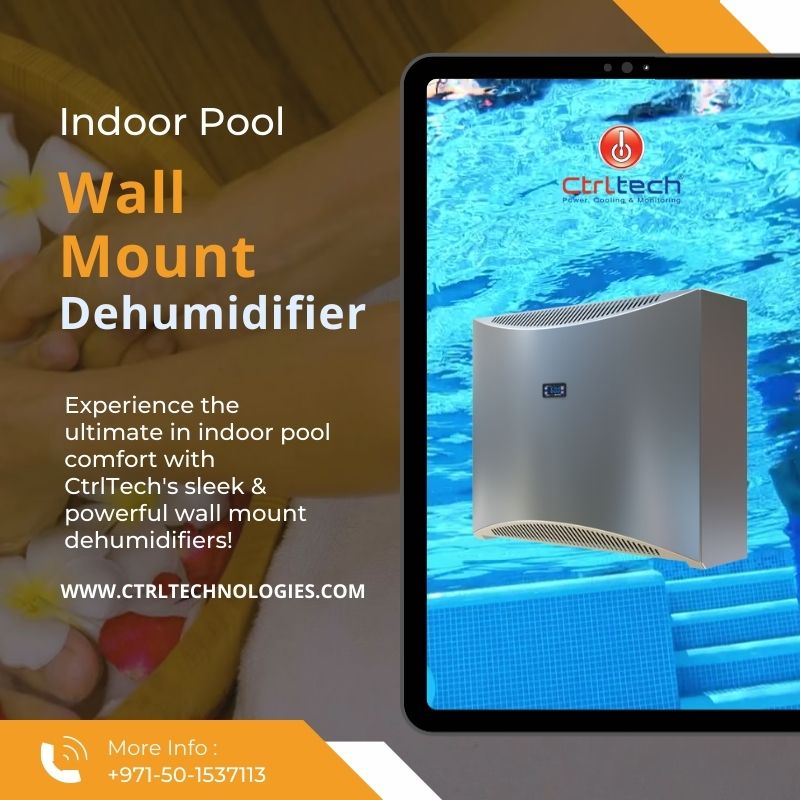
Wall mount dehumidifiers are a crusader in addressing this issue. Wall dryers are designed to keep a check on humidity levels. It is compact, so it is ideal to install in kitchens, bathrooms, indoor swimming pools, and Jacuzzi rooms. So, install it to protect your property and health.

Since it is hanging on the wall, it saves floor space. The space-saving design of wall dehumidifiers is one of the most important benefits. Wall-mounted units are fixed to the wall, out of the way. And frequently more aesthetically pleasing than portable units. Once it is installed, it often becomes barely noticeable as it blends in with your space.

Moreover, modern wall-mounted dehumidification systems have various features to make your life easier. These include adjustable humidistats, which allow you to set your desired humidity level; automatic shut-off features, which turn the unit off when the desired humidity level is reached or when the collection tank is full; and even smart technology, allowing for remote control and monitoring of your dehumidifier via smartphone apps.

Types of Wall Mount Dehumidifiers.

Wall mount dehumidifiers come in various types, each designed to cater to specific needs and environments. Understanding these types is critical to selecting the right one for your space. In principle, there are four types of wall-hung dehumidifiers.

Commercial Wall Mount Dehumidifiers:

It is designed for vast spaces such as warehouses, large buildings, & industrial sites. They are built to handle extensive areas and high levels of humidity efficiently. Wall dehumidifiers often have larger capacity water tanks or continuous drainage options to manage the amount of moisture they extract. They’re also equipped with more robust fans and more durable components to withstand the demands of a commercial environment. However, it can have significantly high noise levels and power consumption due to their high airflow and dehumidifying capacity. 

Residential Wall Mount Dehumidifiers:

These are small-capacity units that are tailored for home use. As it is used in living spaces, it should have silent and low power consumption operation. They are perfect for maintaining a healthy humidity level in living rooms, bedrooms, basements, or any space within a standard-sized home. These units often blend in more seamlessly with home décor and are designed to operate unobtrusively. While they might not have the same capacity as commercial models, they are more than sufficient for the household’s needs.

On-the-Wall Dehumidifiers:

On-the-wall dehumidifiers are mounted directly onto the wall. It is highly visible but also easily accessible for maintenance and control. This type is often chosen for its ease of installation and suitability in spaces where drilling through walls is not feasible. They are available in commercial and residential models, with design and functionality varying according to the intended use. 

Through-the-Wall Dehumidifiers:

Through-the-wall dehumidifiers are installed semi-permanently, where part of the unit is mounted inside the room and partly extends through the wall to the outside. This type is ideal for those who prefer a more integrated look, as only part of the dehumidifier is visible inside the room. They are excellent for controlling humidity in isolated areas or rooms with specific humidity control needs, like archives, server rooms, or indoor pool areas. Installing through-the-wall units is more complex and may require professional assistance, as it involves creating an opening in the wall to accommodate the unit.

Benefits of Using a Dehumidifier for the Wall.

Wall mount dehumidifiers are not just functional appliances; they bring many benefits to your living or working environment. From their compact design to energy efficiency, understanding these advantages can help you appreciate why a wall dehumidifier is a worthwhile addition to your space.

Space-Saving:

As we all know, a wall-mounted dehumidifier hangs on the wall. Hence, it does not occupy floor space like a traditional portable dryer. These types of units’ space-saving features are most useful in premium properties. 

Elegant Look:

Modern wall mount dehumidification systems are designed with aesthetics in mind. They often feature sleek, elegant designs that can blend seamlessly with your interior decor. Instead of being an eyesore, this humidity remover can enhance the look of a room, adding a touch of modern sophistication.

Energy Efficiency:

Energy efficiency is a key consideration today, and wall hung dehumidifiers excel in this area. Many models are designed to use minimal electricity while still effectively controlling humidity. This efficiency doesn’t compromise their performance, ensuring you get the best of both worlds – performance and sustainability.

Silent Operation:

The noise level of appliances is crucial for many people, especially in quiet environments like bedrooms or offices. Considering they are used in living spaces, these units are often engineered for silent operation. It makes them ideal for use in areas where maintaining a quiet atmosphere is essential.

Easy Installation:

While installing a wall mounted dehumidifier might seem daunting, it’s generally straightforward. Many models come with clear instructions and can be installed with basic DIY skills. Professional assistance is readily available for more complex installations, ensuring your dehumidifier is set up quickly and efficiently.

Easy-to-Do Maintenance:

Maintaining a wall mount dehumidifier is typically simpler than expected. Routine tasks like filter cleaning and water tank emptying (if not connected to a continuous drainage system) are usually straightforward. The accessibility of wall-mounted units makes these tasks less cumbersome, encouraging regular maintenance, which prolongs the unit’s life.

Protection of Property:

High humidity can damage the structure of your home and your belongings. Wooden floors, electronics, paintings, and building structures can have adverse effects of high moisture. A wall-mountable dehumidifier increases the life space of devices and buildings by keeping space dry.

Versatility:

These dehumidifiers are versatile in their application. They can be used in various settings, such as museums, libraries, swimming pools, hospitals, galleries, and homes. 

How do you choose the right wall dehumidification system?

Selecting the right wall dehumidifier is essential for effective moisture control and ensuring comfort in your space. Here are key factors to consider:

  • Assess the Space Size: The size of the area where you intend to install the dehumidifier is crucial. The required dehumidification capacity is directly proportional to the volume of the space. Measure the square footage of your room and choose a unit that matches the recommended coverage area.
  • Understand Humidity Levels: Different environments have varying humidity levels. If your space is consistently damp or prone to mold and mildew, you need a dehumidifier with a higher capacity to extract more moisture.
  • Consider Dehumidifier Capacity: A dehumidifier’s capacity is measured in pints of moisture removed per day. A higher capacity unit is necessary for larger or more humid spaces.
  • Energy Efficiency: Look for units with Energy Star ratings or those known for energy efficiency. An energy-efficient model will save you money on your electricity bill and is better for the environment.
  • Noise Level: Consider the noise level Since wall-mounted dehumidifiers are often used in living spaces or work environments. Opt for units that promise quiet operation, especially if you plan to utilize them in bedrooms or quiet areas.
  • Ease of Maintenance: Choose a model that is easy to maintain. Features like washable filters, easy-to-access water tanks, or continuous drainage options can simplify maintenance.
  • Additional Features: Consider digital controls, automatic shut-off, built-in hygrometers, and humidistats. It will ensure precise control of moisture level.
  • Aesthetic Appeal: Since wall mount dehumidifiers are visible, choose one that complements your interior design. Many models come in sleek, modern designs that blend well with various decor styles.

Considering these factors, you can choose a wall dehumidification system that effectively controls humidity and fits your space and lifestyle needs well.

Installation Tips for Wall Mount Dehumidifiers.

Proper installation is key to maximizing the efficiency of your wall mounted dehumidifier. Here are some tips to ensure a smooth installation process:

  1. Choose the Right Location: Install the unit in an area with the highest humidity levels, like near kitchens or bathrooms. Ensure it’s mounted at least six inches from other objects for proper air circulation.
  2. Wall Strength: Verify that the wall is sturdy enough to support the unit’s weight. Use robust mounting brackets and hardware suitable for your wall type, whether drywall, brick, or concrete.
  3. Electrical Connection: Ensure there’s an electrical outlet close to the installation spot. Avoid using extension cords as they can be a safety hazard.
  4. Drainage: If your dehumidification unit has a continuous drainage feature, position it near a drain or route a hose to a suitable drainage point.
  5. Refer to the Manual: Always follow the manufacturer’s instructions for specific installation steps, as these can vary between models.
  6. Consider Professional Help: If you need more confidence in your DIY skills, hiring a professional can ensure a safe and correct installation.

By following these tips, your wall mount dehumidifier will be well-positioned to reduce humidity and improve air quality in your space.

Wall mounted dehumidifier for spa and Jacuzzi

Wall mount & Portable Dehumidifier Comparision.

FeatureWall Mount DehumidifiersPortable Dehumidifiers
InstallationPermanently installed on the wall; requires a one-time setup.Freestanding and mobile; no installation required.
Space UtilizationSaves floor space; ideal for smaller rooms or areas with limited floor space.Takes up floor space; can be moved from room to room.
CapacityGenerally have higher capacity; suited for larger or more humid areas.Typically lower capacity; better for smaller rooms or less humid environments.
AestheticsSleek, integrated into the wall; less obtrusive in room decor.Visible and may not blend with room decor; size and design vary.
Noise LevelOften designed for quieter operation.Noise level varies; some models may be louder.
MaintenanceFixed installation can make maintenance slightly more challenging.Easily accessible for maintenance like filter cleaning and tank emptying.
Energy EfficiencyOften more energy-efficient due to higher capacity and effectiveness.Energy efficiency varies; smaller units may be less powerful but consume less energy.
CostGenerally, it is more expensive due to higher capacity and installation requirements.Usually less expensive; no installation costs.
MobilityNon-movable; fixed in one location.Highly portable; can be moved as needed.
Ideal UseBest for consistent use in a specific area or room, such as an indoor pool, Jacuzzi, garage, Library, and Museum.Suitable for temporary or targeted humidity control in various rooms.
Wall mount and portable dehumidifier comparison.

Conclusion.

Throughout this discussion, we’ve delved into the nuances of wall-mounted dehumidifiers. These include their types, benefits, how to select the right model, installation insights, and a comparative analysis with portable units. 

Wall dehumidifier saves floor space. Their energy efficiency and silent operation complement modern lifestyle needs, blending seamlessly into various decors while providing significant health and protective benefits. The decision to opt for a wall-mounted model over a portable one that is hinge on needing a more permanent, reliable, and aesthetically integrated solution.

Choosing the appropriate wall mount dehumidifier involves careful consideration of space size, humidity levels, and specific needs. Proper installation and maintenance are paramount to ensure longevity and peak performance. 

Categories
Cold room dehumidifier Dehumidifier Industrial Dehumidifier

Cold Storage Dehumidifiers at Work! Guardians of Freshness.

In today’s world, cold storage are the backbone of various industries. It helps to preserve goods by storing them in a controlled temperature climate. But, high humidity inside the cold room can be a spoiler. We will understand here why a cold storage dehumidifier is essential. However, as straightforward as their function might seem, managing a cold storage environment is anything but simple. Here comes the role of a cold room dehumidifier.

Professionals often face a significant challenge within these icy confines: controlling humidity levels. Humidity in cold rooms, or the amount of moisture in the air, is a fluctuating factor heavily influenced by various conditions like external temperature, the frequency of door openings, and even the quality of room insulation. When not managed properly, it can disrupt the balance these rooms strive to achieve, resulting in product damage and infrastructural complications.

But why is there such a prevalent humidity issue in these cold environments? This blog will help you understand the science behind high humidity challenges in cold rooms. Also, it will suggest innovating cold storage dehumidifier solutions to control humidity.

Why is there high humidity in cold rooms? 

By their very design, cold rooms are meant to keep temperatures low, preserving the products’ integrity. However, high humidity within these spaces might seem paradoxical. After all, one would assume cold rooms to be dry. The possible reasons of high moisture and why we need cold storage dehumidifier are as follows:

  • Incomplete Air Circulation:

Cold rooms, especially when packed with products, sometimes suffer from stagnant spots where air doesn’t circulate efficiently. This lack of circulation can result in pockets of higher humidity, as the moisture isn’t evenly distributed and removed.

  • Release of Moisture from Stored Products:

Certain products, especially perishable items like fruits and vegetables, naturally release moisture over time. As this moisture is released within the confined space of a cold room, it can contribute to elevated humidity levels unless adequately managed.

  • Inadequate Insulation and Vapor Barriers:

A well-insulated cold room is essential not just for maintaining temperature levels but also for preventing humidity spikes. Poor quality insulation will increase humid air infiltration from outside and lead to condensation. A cold room dehumidification system can be an effective tool in avoiding condensation.

  • Routine Operations:

Tasks like cleaning, where water might be used, or introducing new products can inadvertently introduce additional moisture to the room. If this moisture isn’t managed or removed promptly, it can lead to a steady rise in humidity over time.

Why is there a need for dehumidification in Cold Rooms?

Cold rooms, though primarily designed for temperature control, often face challenges from excessive humidity. While maintaining a relaxed environment is paramount, balancing humidity is equally crucial. Below are the compelling reasons that underline the importance of dehumidifiers in cold rooms:

Prevention of Mold and Mildew Growth:

One of the foremost concerns arising from unchecked humidity is the growth of mold and mildew. High humidity fosters the growth of mold and mildew, which can contaminate products. At the same time, high moisture inside the cold room can damage infrastructure.

Avoiding Ice Formation:

Excessive humidity in cold rooms can lead to frost and ice accumulation. This process will make the floor slippery and compromise safety. Ice formation also affects the efficiency of cooling devices. 

Preserving Product Quality:

When storing items, especially perishable goods, moisture becomes an enemy. An overly humid environment can accelerate product degradation or decay, shortening their shelf life and leading to unwarranted losses.

Optimizing Energy Efficiency:

Excessive humidity in cold storage demands more from refrigeration systems, leading to increased energy consumption. Humidity can force refrigeration systems to work harder than necessary. A dehumidifier for a cold storage room eases the strain on cooling devices by drying rooms. 

Ensuring Structural Integrity:

Constant exposure to high humidity can erode and damage the cold room’s structure, including walls, floors, and ceilings.

Maintaining Operational Consistency:

Equipment and machinery within cold rooms can malfunction or operate sub-optimally in high humidity conditions. Cold room dehumidification system ensures the durability of machines and reduces downtime.

Understanding the role of dehumidifiers in Cold Rooms.

A dehumidifier is a device that can extract water or humidity from the air and make space dry. In other words, it can lower the humidity in the room. Compressor-based dehumidification systems work on the condensation principle. First, it draws humid air and cools it to the due point when moisture is converted into water. Then dry air is released in the space, and condensate water is stored in the tank or drained out through the hose pipe.

The reality is that cold rooms, despite their primary cooling function, can become hubs for excessive humidity for reasons ranging from warm air intrusion to the natural moisture release of stored products. A cold storage dehumidifier plays a pivotal role in such situations.

A dehumidifier is a frontline defense against escalating humidity levels in a cold room. By continuously extracting moisture from the air:

In a cold room environment, the role of a dehumidifier cannot be overstated, as it plays a critical part in maintaining the room’s overall functionality and safety. It actively prevents the formation of ice and frost.

Ice formed can make the floor slippery and increase the probability of accidents. Also, it overloads HVAC devices. Furthermore, a cold room dehumidifier creates a dry climate that prevents the formation of mildew and mold. When a cold room dehumidification system provides drier conditions, it decelerates decay. Hence, it helps to retain the freshness of perishable items.

Dehumidifiers help make the air in cold rooms healthier. It is also observed that controlled humidity workplaces help improve employees’ efficiency. Even though some people might think dehumidifiers are just extra equipment, they play a big role in cold rooms. By controlling moisture and saving lots of financial losses. This keeps the room and everything in it in good shape for longer.

Dehumidifier for cold storage humidity control

Which is the best dehumidifier for Cold Storage Rooms? Desiccant or Condensation?

When it comes to cold storage rooms, the primary concern is temperature and moisture control. Two prominent types of cold room dehumidification systems are frequently considered for such environments: desiccant and condensation (or refrigerant) dehumidifiers. But which one is better suited for cold storage rooms?

Desiccant Dehumidifiers:

These devices use a desiccant material, like silica gel, to absorb moisture from the air. The desiccant material attracts and captures the moisture as the humid air passes through the unit.

Advantages of Desiccant Dehumidifiers in Cold Storage:

Effective in Low Temperatures: Desiccant rotor dehumidifiers work efficiently even at lower temperatures. They don’t rely on cooling the air to remove moisture, making them especially suitable for cold storage rooms.

  • Less Frost Formation: Since they don’t cool the air to condense moisture, there’s minimal risk of frost or ice formation inside the unit.
  • Consistent Performance: Their performance remains relatively constant across various temperatures and humidity levels.

Condensation (Refrigerant) Dehumidifiers:

These dehumidifiers work by cooling the air below its dew point. Once the air is cooled, moisture condenses into water, collected in a tray, or drained away.

Challenges of Condensation Dehumidifiers in Cold Storage:

  • Reduced Efficiency at Low Temperatures: They tend to be less effective as temperatures drop, making them less suitable for icy environments.
  • Potential for Frost Formation: The cooling mechanism can lead to frost buildup inside the unit, especially if the room is cold.

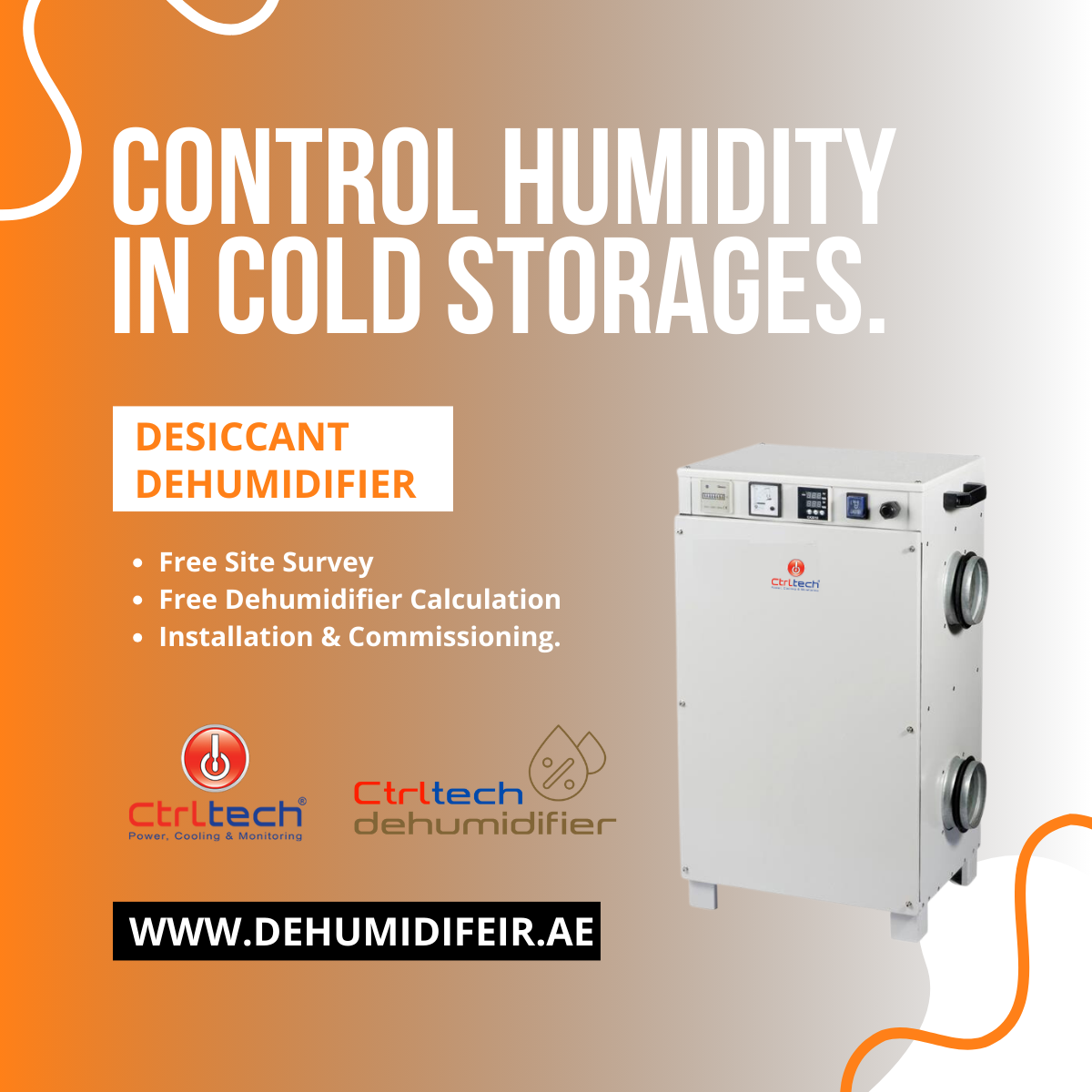
For cold storage rooms, desiccant silica gel dehumidifiers often emerge as the preferred choice. Their ability to function efficiently in low temperatures and the reduced risk of frost formation suits them for such environments. While condensation dehumidifiers have their advantages in other settings, desiccant models tend to have the edge regarding cold storage.

Additional tips for humidity control in cold rooms

Using a cold room dehumidifier to control humidity can tend to high CAPEX and running costs. So, in addition to the cold storage dehumidification system, we need to incorporate additional strategies to reduce operating costs. Here are some practical tips to ensure optimal humidity levels and safeguard the longevity and quality of stored items:

Regular Maintenance: Cold room systems need regular checks and maintenance like any other machinery. Preventive maintenance at equal intervals helps to keep components clean & efficient.

Seal Gaps and Leaks: Any small openings or cracks can let warm, moist air seep into the cold room. Ensure doors are sealed tightly and inspect walls, roofs, and floors regularly for potential gaps. Using weather stripping or insulating foams can be effective in sealing these gaps.

Optimize Air Circulation: Ensure that the cold storage room has adequate ventilation. Proper air circulation helps evenly distribute cold air and prevent moisture buildup in specific areas.

Monitor Humidity Levels: Invest in a good quality hygrometer to closely monitor the humidity levels in cold rooms. Awareness of the moisture levels can help take timely corrective actions.

Limit Door Openings: Warm air from outside can enter every time the door opens, raising the room’s humidity. Educate staff to minimize door openings and close doors swiftly after use. Installing plastic strip curtains can also be a barrier against warm air ingress.

Use Moisture Absorbent Materials: While desiccant or cold temperature dehumidifiers use this principle on a larger scale, placing more miniature desiccant packs (like those containing silica gel) in strategic locations can offer supplementary moisture absorption.

Opt for Insulated Walls and Floors: Using insulated materials for walls and floors can reduce condensation. 

Regularly Defrost Freezers: If the cold room has integrated freezing sections, ensure regular defrosting. It prevents ice buildup, which can affect humidity levels when it starts to melt.

Educate Your Staff: Awareness is key. Ensure that everyone working in and around the cold room understands the importance of humidity control and its role in maintaining it.

Review and Update: The needs of a cold room can change over time based on its usage, stored items, and external conditions. Regularly review and update your humidity control strategies to adapt to changing needs.

Summary.

High humidity in cold rooms and cold storage can harm the stored items and the infrastructure. While desiccant and condensation dehumidifiers offer solutions, desiccant dehumidifiers often have the edge for specific cold conditions. Nonetheless, it is essential to understand the requirements of each cold storage room and select a dehumidification solution accordingly. Effectively controlling humidity marks progress in extending the shelf life of stored goods while guaranteeing the durability and performance of your cold storage setups.

For further information on cold storage dehumidifiers, please get in touch with us.

Categories
Dehumidifier Dehumidifier in Dubai Dehumidifier in UAE Industrial Dehumidifier Portable Dehumidifier Swimming pool dehumidifier

Dehumidifier in UAE. Dehumidifier in Dubai.

dehumidifier in UAE. Dehumidifier supplier
CtrlTech offers wide range of dehumidifier in UAE. They offer Portable dehumidifier for homes, Industrial dehumidifier, Swimming pool dehumidifier and Desiccant dehumidifier. Dehumidifier is equipment which reduces humidity from air. High humidity will not only create health issue but it also damage your property. CtrlTech is reputed dehumidifier supplier in UAE.

Dehumidifier in UAE by CtrlTech:

Ctrltech offer following dehumidifier in Dubai, UAE.

CD-25L Portable dehumidifier in UAE:

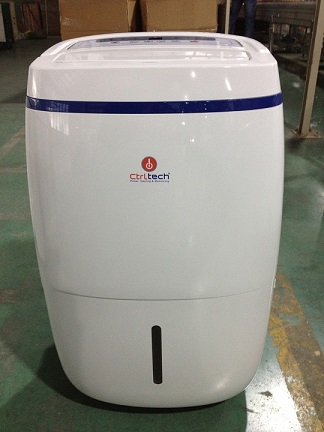
Dehumidifier in UAE. Dehumidifier in dubai. Dehumidifier supplierCD-25L dehumidifier of CtrlTech is very popular dehumidifier for home application. It has capacity of 25 liter/day ( 52 pint per day). It is suitable for medium size two bedroom flat area of 100o to 1200 sq. ft. This dehumidifier has water tank of 5 liter and if tank is full, dehumidifier will give alarm and stop working for safety purpose.  Control panel is provided in CD-25L Dehumidifier. Control panel has small LCD display which show current humidity level. From panel you can sent required humidity level. You can adjust fan speed slow or fast. You can set timer for switch off unit automatically from panel

 CD-85L Industrial Dehumidifier in UAE:

CD-85L is Industrial type portable dehumidifier with capacity of 85 liter/day. It is very powerful machine. Dehumidifier provided with large wheel and metal handle for easy movement. Control Panel has small LCD display which shows current and set humidity level with help of up and down arrow button. Dehumidifier will switch off Industrial dehumidifier in UAE.automatically when set humidity equal to current humidity. Dehumidifier has filter at front. Dehumidified air discharge from back side of dehumidifier. From control panel you can set timer for automatic switch off. Operational hours also can be view from panel. Body made up of high quality plastic which is corrosion proof.  Unit has facility of continuous drainage system hence it supplied with 3 meter drainage pipe. Drainage water will be discharge with help of gravity. Condensate pump is optional item. Unit consist of rotary compressor which is energy efficient. Dehumidifier Unit charged with R134 environmental friendly refrigerant gas. Unit has rugged construction and suitable to use any industrial applications.

SPD Series Swimming Pool Dehumidifier

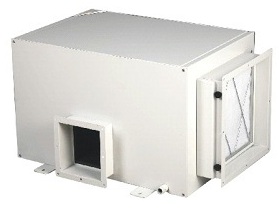
Swimming pool dehumidifier in UAE, Dubai.SPD series dehumidifier is ceiling or wall mount type dehumidifier specially designed for swimming pool and large areas like warehouse. Unit supplied with LCD controller from which we can set required humidity level and timer. Unit is easy to install. Need to done only three connection; drainage connection, power connection and Controller connection. SPD Dehumidifier has inlet and outlet duct.

Contact us:

CONTROL TECHNOLOGIES FZE

PH: +971 6 5489626

M: +971 50 1537113

E: SALES@CTRLTECHNOLOGIES.COM

OR WRITE US

Go back

Your message has been sent

Warning
Warning
Warning
Warning

Warning.


Categories
What is Dehumidifier?

What is Dehumidifier or De-humidifier?

In simple word Dehumidifier is machine which removes moisture from the air & regulate humidity level and create comfortable living conditions that are inhospitable to dust mites, mold, mildew, and other allergens.

When people complain about humidity, for the most part they’re talking about relative humidity. Depending on temperature, air can hold a fixed amount of water vapor; relative humidity is the ratio of actual vapor in the air to this fixed amount. For example, at a temperature of 68 degrees Fahrenheit (20 degrees Celsius), one cubic meter (35 cubic feet) of air can hold about 18 grams (.6 ounces) of water. This would be a state of saturation, otherwise known as 100 percent relative humidity. That’s a lot of jargon to describe a level of humidity that, for many people, can feel extremely uncomfortable. When this humidity seeps into your home, it can make rooms feel stuffy and perhaps even smell musty. Beyond these superficial discomforts, too much humidity can have some more serious disadvantages, too. An overly humid home can lose its structural integrity, attract pest like silverfish and centipedes, and even make you sick.

At home 30 to 50% of RH is recommended. To maintain this humidity level at home, there are various types of Home Dehumidifier or portable dehumidifiers available in Market.  Some of the reputed brands of home dehumidifier or portable dehumidifier or basement dehumidifiers are Novita dehumidifier, Aerial Dehumidifier, Delonghi or De’longhi Dehumidifier, Ebac Dehumidifier, Frigidaire dehumidifier, westighouse dehumidifier, crown dehumidifier, Eva-dry dehumidifier, Bry-air Dehumidifier, Green Air Dehumidifier, Dri-eaz dehumidifier, danby dehumidifier, LG dehumidifier, soleus dehumidifier etc.

Dehumidifiers are mainly two type based on technology it use for dehumidification and that are:

1)      Refrigerant type Dehumidifier or Mechanical Dehumidifier.

2)      Desiccant Dehumidifier.

Based on its application dehumidifiers are classified into following categories:

1)      Portable Dehumidifier or Home Dehumidifier.

2)      Basement dehumidifier

3)      Industrial Dehumidifier.

4)      Swimming Pool dehumidifier.

5)      Commercial Dehumidifier.

In Next few articles we will try to find out answer for different questions like why do we need dehumidifier?, how dehumidifier works? , type of dehumidifier?  & How to select dehumidifier?

We are Dehumidifier supplier in UAE. We supply all types of Dehumidifier in Dubai, Abu Dhabi, Sharjah, Fujairah, RAK, Al Ain and other emirates in addition to Middle East countries like Oman, Qatar, Saudi Arabia, Kuwait, Iraq etc.

For Any Sales Enquiry please contact us:

CONTROL TECHNOLOGIES FZE

SAIF ZONE, SHARJAH, UAE.

Ph: +971-6-5489626

E-MAIL: sales@ctrltechnologies.com

Web: www.ctrltechnologies.com

Categories
Dehumidifier Dehumidifier in Dubai Dehumidifier in UAE Industrial Dehumidifier Portable Dehumidifier Swimming pool dehumidifier

Welcome to home of Dehumidification.

Home of Dehumidifier
 Dehumidifier in UAE. Dehumidifier in dubai. Dehumidifier supplier

 Portable Dehumidifier

 We offer wide range of Dehumidifier or de-humidifier or de humidifier for applications such as Home, Indoor Swimming pool, Spa, Server Room, Library, Laboratory, Museums and Industrial Application in Dubai  & UAE. We also supply Industrial Dehumidifier & Marine Dehumidifier. There are different types of Dehumidifier available based on its applications and technology. Major types of Dehumidifiers are as follow:1) Portable Dehumidifier: This types of dehumidifier mainly use as home Dehumidifier to serve small area. It commonly know as home dehumidifier or basement dehumidifier.2) Industrial Dehumidifier: This types of dehumidifier mainly for dehumidification for large areas or to achieve desired humidity level required for various industrial processes. We offer Aerial Germany make Industrial Dehumidifier or De-humidifier. It also called as commercial Dehumidifier.3) Swimming Pool Dehumidifier: As name suggested this type of dehumidifier use to reduce humidity in Indoor swimming pool area.

1) Desiccant Dehumidifier: This types of dehumidifier mainly use when we need to achieve dehumidification at lower temperature. It has desiccant wheel which absorb humidity.

We are reputed supplier for dehumidifier in Dubai, Abu Dhabi, Ras Al Khaima, Al Ain, Fujairah and other Middle East countries such as Oman, Iraq, Afghanistan, Qatar, Saudi Arabia, Kuwait etc.  CtrlTech exclusive dealer for dehumidifier by Aerial Germany.

Contact us for more Details:

CONTROL TECHNOLOGIES FZE

SAIF ZONE, SHARJAH, UAE.

Ph: +971-6-5489626

Mob: +971-50-1537113

E-MAIL: sales@ctrltechnologies.com

Web: www.ctrltechnologies.com


 Industrial dehumidifier in UAE.

 Industrial Dehumidifier.

 Swimming pool dehumidifier in UAE, Dubai.

 Swimming Pool Dehumidifier.

Desiccant Dehumidifier in Dubai

Desiccant Dehumidifier.