People want to use less energy to save money and help the planet. They search for ways to do this at home. A small machine called a dehumidifier is only sometimes considered a hero in this quest. But it can help a lot. It takes out the extra wetness in the air. A dehumidification system makes your home more comfy. And it can lower how much energy you use too.
The connection between wet air and energy use is tricky. Moist air in your home affects how well your heating and cooling works. Damp air can make it feel hotter, so you use more air conditioning in hot times. It makes you use more energy and might break your cooling stuff sooner.
Also, an air dehumidifier is vital for more than just its use. It helps with the wetness in your home, making it better for energy and the Earth. It helps make a home comfy, saves money, and is earth-friendly.
As we learn more about how dehumidifiers help lower electricity costs, we must see the more significant impact of using them. Besides saving money, using humidity dryers shows a dedication to reducing our environmental impact and fighting climate change. This discovery is about finding a secret way to save energy and understanding how our choices affect our homes and the world around us.
Next, we’ll look at how dehumidifiers work, their effect on your energy bills, and what you can do to use them well. We’ll see how humidity affects energy expenses and choose the best dehumidifier. Our guide gives you the info you need to make smart choices about your energy use and help the environment.
Understanding Dehumidifiers.
A dehumidifier extracts excess moisture from the air at the heart of its operation. This process is not just about improving air quality; it’s a strategic move towards creating a more energy-efficient home. De-humidifiers operate on a simple yet effective principle: they draw in humid air, remove the moisture, and then release the dehumidified air back into the room. This cycle prevents the proliferation of mold and mildew and contributes to a feeling of comfort that doesn’t rely on adjusting the thermostat.
The Link Between Humidity and Energy Cost.
It’s crucial to understand the relationship between indoor humidity levels and the perceived temperature. High humidity can make the air feel warmer than it is, prompting an increased dependency on air conditioning systems. This answer makes sense, but it makes us use more power and pay more for electricity. A dehumidifier helps by keeping humidity at a good level. This means we don’t need as much cooling as we use less power.
Industrial dehumidifiers are used every day in commercial applications. Considering hours of usage, a dehumidification system saves lots of costs.
Dehumidifiers and Air Conditioning.
The synergy between dehumidification units and air conditioning systems is a testament to the potential for energy conservation within our homes. Dehumidifiers alleviate the workload on air conditioners by ensuring that the air remains at a comfortable humidity level. Humidity dryers conserve energy and prolong the lifespan of HVAC systems by sparing them from overuse during humid months.
Efficiency of modern air dryers.
Over the years, dehumidifier technology has improved with leaps and bounds regarding energy saving. The advent of ENERGY STAR-rated dehumidifiers has set a new standard, allowing homeowners to combat humidity without dreading skyrocketing energy costs. These models are meticulously designed to offer optimal dehumidification while consuming minimal energy. So, this device embodies the perfect marriage of functionality and sustainability.
Calculating Savings.
Quantifying the savings incurred by using a dehumidifier can be an eye-opening exercise. While specific savings vary based on numerous factors including the size of the space, the climate, and the efficiency of the device, the overarching principle remains the same: reduced humidity levels translate to less reliance on air conditioning, which in turn results in lower energy bills. The calculation of these savings, though dependent on individual circumstances, underscores the undeniable financial advantage of incorporating a dehumidifier into your home’s energy management strategy.
What are optimal settings for dehumidifiers?
Achieving maximum efficiency and savings from a dehumidifier hinges on finding the ideal humidity setting. A general guideline suggests maintaining between 30% and 50% indoor humidity levels. This range strikes a balance between preventing moisture-related issues and ensuring the air isn’t overly dried, which can be as uncomfortable as high humidity.
Tips for Choosing the Right Dehumidifier.
Selecting the ideal dehumidifier for your needs involves several considerations. The size of the area to be dehumidified, the capacity of the unit, and its energy efficiency rating are paramount. Choosing a model that is adequately sized for your space is essential to avoid inefficiency and unnecessary energy expenditure.
Maintenance tips for dehumidification systems.
The longevity and efficiency of a dehumidifier are greatly enhanced by regular maintenance. Simple actions such as cleaning the air filter and ensuring unobstructed airflow can profoundly affect the device’s performance. Proper maintenance ensures that the dehumidifier operates at peak efficiency and extends its lifespan, providing value over time.
Alternative energy-saving tips.
Try LED lights instead of old ones. They use less power. Get high-efficiency machines, especially ones with ENERGY STAR dehumidifier labels. They help cut down on power use. Also, use smart home stuff like thermostats that you can program. It allows the use of power only when needed. Fix leaks in your house. It stops heat or cool air from getting out, which means less work for your heating or cooling systems.
Cutting electricity costs involves using less energy. It means changing how we act and using new tools. Dehumidifiers are one of these tools. They help keep humidity at reasonable levels, which saves energy and makes the home more excellent. They can save big money when used with other energy-saving things and a commitment to help the Earth.
Dehumidifiers will be essential to deal with high energy prices and climate issues. These solutions can help us use less energy, do less harm to the Earth, and have a lovely, cheap home. We hope this article helped you understand the contribution of dehumidifiers towards lowering energy consumption.
This blog will help you understand all aspects of wall-mounted dehumidifiers to make smart purchase decisions. Imagine living in a world where the air in your home is always fresh, without the slightest hint of mustiness or dampness. That’s the world wall mount dehumidifiers help create.
A wall type dehumidifier is designed to extract excess moisture from the air, ensuring that the humidity levels within your space remain in the optimal range. This range is typically between 30% and 50% humidity, ideal for human health and comfort. Their fixed installation sets wall dehumidifiers apart, making them a permanent solution for moisture control in your home or business.
Why is controlling humidity so important? The answer lies in the numerous problems that arise from high humidity levels. Excessive moisture in the air can lead to the growth of mold and mildew, which are not only unsightly but can also cause a variety of health issues, especially for those with allergies or respiratory problems. Additionally, high humidity can warp wood, cause paint to peel, and even compromise the structural integrity of your building over time.
Wall mount dehumidifiers are a crusader in addressing this issue. Wall dryers are designed to keep a check on humidity levels. It is compact, so it is ideal to install in kitchens, bathrooms, indoor swimming pools, and Jacuzzi rooms. So, install it to protect your property and health.
Since it is hanging on the wall, it saves floor space. The space-saving design of wall dehumidifiers is one of the most important benefits. Wall-mounted units are fixed to the wall, out of the way. And frequently more aesthetically pleasing than portable units. Once it is installed, it often becomes barely noticeable as it blends in with your space.
Moreover, modern wall-mounted dehumidification systems have various features to make your life easier. These include adjustable humidistats, which allow you to set your desired humidity level; automatic shut-off features, which turn the unit off when the desired humidity level is reached or when the collection tank is full; and even smart technology, allowing for remote control and monitoring of your dehumidifier via smartphone apps.
Types of Wall Mount Dehumidifiers.
Wall mount dehumidifiers come in various types, each designed to cater to specific needs and environments. Understanding these types is critical to selecting the right one for your space. In principle, there are four types of wall-hung dehumidifiers.
Commercial Wall Mount Dehumidifiers:
It is designed for vast spaces such as warehouses, large buildings, & industrial sites. They are built to handle extensive areas and high levels of humidity efficiently. Wall dehumidifiers often have larger capacity water tanks or continuous drainage options to manage the amount of moisture they extract. They’re also equipped with more robust fans and more durable components to withstand the demands of a commercial environment. However, it can have significantly high noise levels and power consumption due to their high airflow and dehumidifying capacity.
Residential Wall Mount Dehumidifiers:
These are small-capacity units that are tailored for home use. As it is used in living spaces, it should have silent and low power consumption operation. They are perfect for maintaining a healthy humidity level in living rooms, bedrooms, basements, or any space within a standard-sized home. These units often blend in more seamlessly with home décor and are designed to operate unobtrusively. While they might not have the same capacity as commercial models, they are more than sufficient for the household’s needs.
On-the-Wall Dehumidifiers:
On-the-wall dehumidifiers are mounted directly onto the wall. It is highly visible but also easily accessible for maintenance and control. This type is often chosen for its ease of installation and suitability in spaces where drilling through walls is not feasible. They are available in commercial and residential models, with design and functionality varying according to the intended use.
Through-the-Wall Dehumidifiers:
Through-the-wall dehumidifiers are installed semi-permanently, where part of the unit is mounted inside the room and partly extends through the wall to the outside. This type is ideal for those who prefer a more integrated look, as only part of the dehumidifier is visible inside the room. They are excellent for controlling humidity in isolated areas or rooms with specific humidity control needs, like archives, server rooms, or indoor pool areas. Installing through-the-wall units is more complex and may require professional assistance, as it involves creating an opening in the wall to accommodate the unit.
Benefits of Using a Dehumidifier for the Wall.
Wall mount dehumidifiers are not just functional appliances; they bring many benefits to your living or working environment. From their compact design to energy efficiency, understanding these advantages can help you appreciate why a wall dehumidifier is a worthwhile addition to your space.
Space-Saving:
As we all know, a wall-mounted dehumidifier hangs on the wall. Hence, it does not occupy floor space like a traditional portable dryer. These types of units’ space-saving features are most useful in premium properties.
Elegant Look:
Modern wall mount dehumidification systems are designed with aesthetics in mind. They often feature sleek, elegant designs that can blend seamlessly with your interior decor. Instead of being an eyesore, this humidity remover can enhance the look of a room, adding a touch of modern sophistication.
Energy Efficiency:
Energy efficiency is a key consideration today, and wall hung dehumidifiers excel in this area. Many models are designed to use minimal electricity while still effectively controlling humidity. This efficiency doesn’t compromise their performance, ensuring you get the best of both worlds – performance and sustainability.
Silent Operation:
The noise level of appliances is crucial for many people, especially in quiet environments like bedrooms or offices. Considering they are used in living spaces, these units are often engineered for silent operation. It makes them ideal for use in areas where maintaining a quiet atmosphere is essential.
Easy Installation:
While installing a wall mounted dehumidifier might seem daunting, it’s generally straightforward. Many models come with clear instructions and can be installed with basic DIY skills. Professional assistance is readily available for more complex installations, ensuring your dehumidifier is set up quickly and efficiently.
Easy-to-Do Maintenance:
Maintaining a wall mount dehumidifier is typically simpler than expected. Routine tasks like filter cleaning and water tank emptying (if not connected to a continuous drainage system) are usually straightforward. The accessibility of wall-mounted units makes these tasks less cumbersome, encouraging regular maintenance, which prolongs the unit’s life.
Protection of Property:
High humidity can damage the structure of your home and your belongings. Wooden floors, electronics, paintings, and building structures can have adverse effects of high moisture. A wall-mountable dehumidifier increases the life space of devices and buildings by keeping space dry.
Versatility:
These dehumidifiers are versatile in their application. They can be used in various settings, such as museums, libraries, swimming pools, hospitals, galleries, and homes.
How do you choose the right wall dehumidification system?
Selecting the right wall dehumidifier is essential for effective moisture control and ensuring comfort in your space. Here are key factors to consider:
Assess the Space Size: The size of the area where you intend to install the dehumidifier is crucial. The required dehumidification capacity is directly proportional to the volume of the space. Measure the square footage of your room and choose a unit that matches the recommended coverage area.
Understand Humidity Levels: Different environments have varying humidity levels. If your space is consistently damp or prone to mold and mildew, you need a dehumidifier with a higher capacity to extract more moisture.
Consider Dehumidifier Capacity: A dehumidifier’s capacity is measured in pints of moisture removed per day. A higher capacity unit is necessary for larger or more humid spaces.
Energy Efficiency: Look for units with Energy Star ratings or those known for energy efficiency. An energy-efficient model will save you money on your electricity bill and is better for the environment.
Noise Level: Consider the noise level Since wall-mounted dehumidifiers are often used in living spaces or work environments. Opt for units that promise quiet operation, especially if you plan to utilize them in bedrooms or quiet areas.
Ease of Maintenance: Choose a model that is easy to maintain. Features like washable filters, easy-to-access water tanks, or continuous drainage options can simplify maintenance.
Additional Features: Consider digital controls, automatic shut-off, built-in hygrometers, and humidistats. It will ensure precise control of moisture level.
Aesthetic Appeal: Since wall mount dehumidifiers are visible, choose one that complements your interior design. Many models come in sleek, modern designs that blend well with various decor styles.
Considering these factors, you can choose a wall dehumidification system that effectively controls humidity and fits your space and lifestyle needs well.
Installation Tips for Wall Mount Dehumidifiers.
Proper installation is key to maximizing the efficiency of your wall mounted dehumidifier. Here are some tips to ensure a smooth installation process:
Choose the Right Location: Install the unit in an area with the highest humidity levels, like near kitchens or bathrooms. Ensure it’s mounted at least six inches from other objects for proper air circulation.
Wall Strength: Verify that the wall is sturdy enough to support the unit’s weight. Use robust mounting brackets and hardware suitable for your wall type, whether drywall, brick, or concrete.
Electrical Connection: Ensure there’s an electrical outlet close to the installation spot. Avoid using extension cords as they can be a safety hazard.
Drainage: If your dehumidification unit has a continuous drainage feature, position it near a drain or route a hose to a suitable drainage point.
Refer to the Manual: Always follow the manufacturer’s instructions for specific installation steps, as these can vary between models.
Consider Professional Help: If you need more confidence in your DIY skills, hiring a professional can ensure a safe and correct installation.
By following these tips, your wall mount dehumidifier will be well-positioned to reduce humidity and improve air quality in your space.
Wall mount & Portable Dehumidifier Comparision.
Feature
Wall Mount Dehumidifiers
Portable Dehumidifiers
Installation
Permanently installed on the wall; requires a one-time setup.
Freestanding and mobile; no installation required.
Space Utilization
Saves floor space; ideal for smaller rooms or areas with limited floor space.
Takes up floor space; can be moved from room to room.
Capacity
Generally have higher capacity; suited for larger or more humid areas.
Typically lower capacity; better for smaller rooms or less humid environments.
Aesthetics
Sleek, integrated into the wall; less obtrusive in room decor.
Visible and may not blend with room decor; size and design vary.
Noise Level
Often designed for quieter operation.
Noise level varies; some models may be louder.
Maintenance
Fixed installation can make maintenance slightly more challenging.
Easily accessible for maintenance like filter cleaning and tank emptying.
Energy Efficiency
Often more energy-efficient due to higher capacity and effectiveness.
Energy efficiency varies; smaller units may be less powerful but consume less energy.
Cost
Generally, it is more expensive due to higher capacity and installation requirements.
Usually less expensive; no installation costs.
Mobility
Non-movable; fixed in one location.
Highly portable; can be moved as needed.
Ideal Use
Best for consistent use in a specific area or room, such as an indoor pool, Jacuzzi, garage, Library, and Museum.
Suitable for temporary or targeted humidity control in various rooms.
Wall mount and portable dehumidifier comparison.
Conclusion.
Throughout this discussion, we’ve delved into the nuances of wall-mounted dehumidifiers. These include their types, benefits, how to select the right model, installation insights, and a comparative analysis with portable units.
Wall dehumidifier saves floor space. Their energy efficiency and silent operation complement modern lifestyle needs, blending seamlessly into various decors while providing significant health and protective benefits. The decision to opt for a wall-mounted model over a portable one that is hinge on needing a more permanent, reliable, and aesthetically integrated solution.
Choosing the appropriate wall mount dehumidifier involves careful consideration of space size, humidity levels, and specific needs. Proper installation and maintenance are paramount to ensure longevity and peak performance.


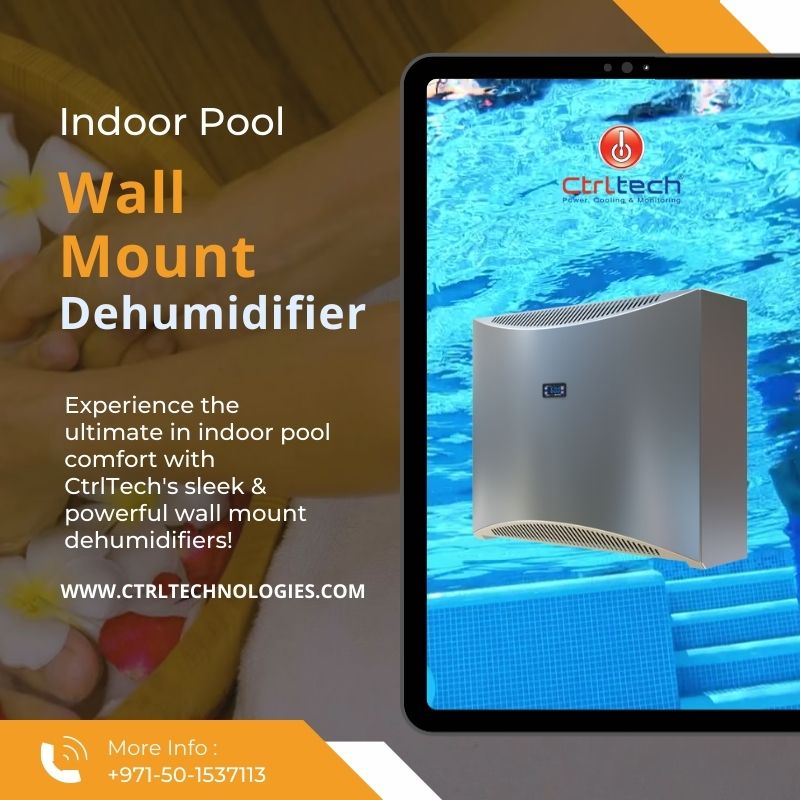
 Dehumidifiers Dubai.